
As a home builder, you have a unique opportunity to create durable and functional homes and enhance their long-term value and appeal. We’ll discuss how wood flooring can be a smart choice for your projects, offering homeowners timeless beauty and tangible benefits. This guide is designed to provide you with the insights you need to make informed decisions about incorporating wood flooring into your builds, enhancing the overall appeal and market value of the homes you create.
Durability and Longevity
Wood has been used as a floor covering for centuries and continues to stand the test of time today, with a reputation as a beautiful, durable floor that can last for generations.
Architectural Digest says it’s no wonder people have been installing wood flooring for ages because, “It’s natural, eco-friendly, and incredibly durable.”
Part of that durability comes from the ability to re-sand most wood floors as they experience normal wear and tear. In contrast to much of the newer, disposable flooring options like carpet, LVP, and laminate; wood floors with heavy wear and damage can be re-sanded or refinished as needed and returned to new life. Today, the estimated service life for a traditional residential wood floor is 75 years.
Cost-Benefit Analysis
A floor with timeless aesthetic appeal that can last for generations leads to another benefit: avoiding the cost of replacement.
Replacing any floor is one of the most expensive, time-consuming, and disruptive projects a homeowner can choose. It usually requires a complete move out of people, pets, and furniture and extended time out of the home while new floors are installed. It is best to avoid an unnecessary floor replacement by choosing a floor that will last.
While wood floors will typically cost more up-front than vinyl, laminate, or carpet, the long-term savings on maintenance and avoiding the required replacement of those cheaper options make wood flooring come out on top in most every cost-benefit analysis.

Impact on Property Value
While wood flooring is a proven long-term investment for most homes, it also offers incredible value in the short term – even if installed right before the home is sold.
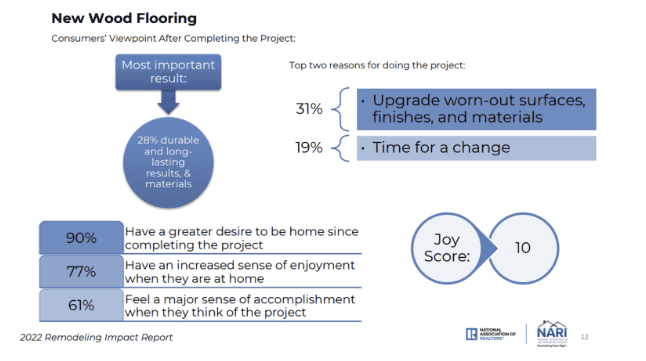
According to the National Association of Realtors’ Remodeling Impact Report, refinishing an existing wood floor (147% ROI) or installing a new wood floor (118% ROI) were the two highest return on investment projects a homeowner could do to their home before selling it.

In addition, 90% of consumers reported a greater desire to be home, and 77% said they had an increased sense of enjoyment after refinishing or putting in new wood floors. By every measure, wood floors are an excellent financial investment, leading to a more enjoyable living experience.
Consider Your Costs
Flooring is part of every new construction budget. The critical thing to remember is that typically, only 40-60% of the total cost of a floor is in materials, while the rest is installation labor. When choosing a cheaper, disposable floor, you minimize your savings but miss out on all the benefits of a wood floor.
As an example, note the difference between selecting wood flooring against a rigid core vinyl floor:

In this common scenario, choosing a rigid core floor to avoid the 50% increase in materials cost only saves 25% on the project’s total cost while sacrificing the beauty and longevity of the finished product as well as the market value of the home.
Choosing the Right Wood Flooring
Many types of genuine hardwood floors can add value and beauty to your home projects.
Solid wood or engineered wood are excellent options, but it’s important to know the wear layer thickness when choosing an engineered wood floor. Look for wear layers at least 3mm or thicker that may be re-sanded more than once.
Likewise, a factory-finished (prefinished) or site-finished (unfinished) can offer the same great long and short-term benefits with different strengths and weaknesses depending on the project.
We developed a comprehensive guide to choosing the best unfinished or prefinished wood floor for your projects, and are always available to consult on your specific project. Contact us today or locate a showroom to visit to see all your options.
The National Wood Flooring Association has additional resources to guide homeowners in choosing the best real wood floor for their homes.
For builders aiming to deliver beauty and value in their construction projects, hardwood flooring adds both while giving the homeowner a home they love. It is not just a surface but a long-term investment that enhances a home’s durability, appeal, and market value. Wood flooring offers a unique combination of benefits with its proven longevity, aesthetic versatility, and substantial return on investment.
By choosing the right wood floor and understanding the balance between upfront costs and long-term gains, you can significantly boost the quality and value of your building projects. As you strive to meet the evolving preferences of homeowners, remember that wood flooring is more than just a detail—it’s a foundational element that reflects the quality and care put into every home.